Recently, we hosted a workshop for local nonprofits on community foundations and Donor Advised Funds. For those who were not able to join us, here is some key information about working with donors with Donor Advised Funds and your local community foundation.
Omaha consistently punches above its weight when it comes to giving back. Omaha ranks in the top 3% of per capita giving, and that doesn’t just come from a handful or wealthy families, but a mindset of the people who live here that philanthropy is part of everyday life. That massive level of giving supports a wide range of local nonprofits. Understanding how donors give, particularly through Donor Advised Funds, can help organizations better connect with that support.
What a community foundation does
Community foundations connect donors with nonprofits through structured giving and grantmaking. Across the country, there are more than 900 community foundations. Each community foundation reflects the needs of its region. Some focus heavily on donor services, while others emphasize convening partners or addressing specific community challenges.
At the Omaha Community Foundation, our work typically includes supporting nonprofits, managing charitable funds, facilitating grantmaking, convening partners across the community, and responding to local needs and emergencies. In practice, this includes sharing information about community needs and connecting donors with nonprofit organizations aligned with their interests.
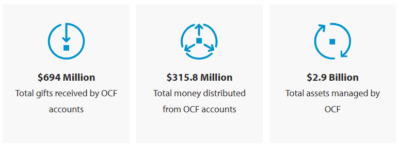
At the Omaha Community Foundation, this work happens across a large network of donors and nonprofits. Recent OCF data reflects that scale:
- 2,143 donor funds
- 19,000 donations to 3,670 nonprofits
- 72% of giving directed to the Omaha metro
These figures reflect the volume of giving managed and distributed to nonprofits across the community. You can see more insights and data from 2025 here.
How OCF connects donors and nonprofits using DAFs
Community foundations also play a role in helping people understand areas of high need and how resources can be used effectively – how your funds can make a huge impact. This includes managing Community Interest Funds that involve residents in grantmaking decisions, sharing information about nonprofit programs and funding opportunities, and providing insight and research into priority areas such as housing, economic opportunity, and mental and behavioral health. Rather than providing direct services, the focus is on using community knowledge and relationships to help inform where funding can be most meaningful.
Understanding Donor Advised Funds
A Donor Advised Fund is a charitable investment account.
Donors contribute cash, stock, or other assets, receive an immediate tax deduction, and then recommend grants to nonprofits over time. Funds in the account can be invested and grow tax-free.
According to the 2025 Annual Donor Advised Fund Report, produced independently by the Donor Advised Fund Research Collaborative, Donor Advised Funds are a significant part of the current giving landscape:
- $326.45 billion in total assets in 2024
- 3.56 million accounts across 1,485 organizations
- $64.89 billion granted to nonprofits in 2024
This growth reflects how quickly DAFs are expanding as a charitable giving tool.. You can read more about that research here.
For nonprofits, DAFs influence how donor conversations take place. When it comes to trusted donors, ask them about their charitable accounts, their plans for long-term grantmaking and how your organization fits in, and take the time to learn about their current priorities and their past giving.
It is also important to understand IRS rules related to DAFs. For example, bifurcation is the prohibited practice of splitting a single charitable donation into deductible and non-deductible portions when a benefit is received. This can affect how DAF grants are used for event sponsorships or similar activities – think about bifurcation when selling dinners and tables at a gala event. Clear communication helps ensure both donors and nonprofits remain in compliance.
When working with a community foundation, it is important to provide information that a donor needs when making decisions. few practical points we covered for nonprofit leaders:
- Be clear about your mission and the need you are addressing
- Provide data and outcomes to show your work
- Ask for guidance, not just funding
- Build relationships over time
If you are working with donors who use DAFs, our team is available to help answer questions. If you want to be included on future workshop invitations, please join our mailing list or reach out to our team.